Different load types
Surface, line and point loads each need their own unit and source.
Loading...
COREVIA CIVIL ENGINEERING
Organise loads and geometry before the engineering study.
CORESTRUCT gathers building and soil data. From supplied values, it aggregates loads, calculates volumes and can compute a gross bearing-area quotient.
Web tool available in French and English.

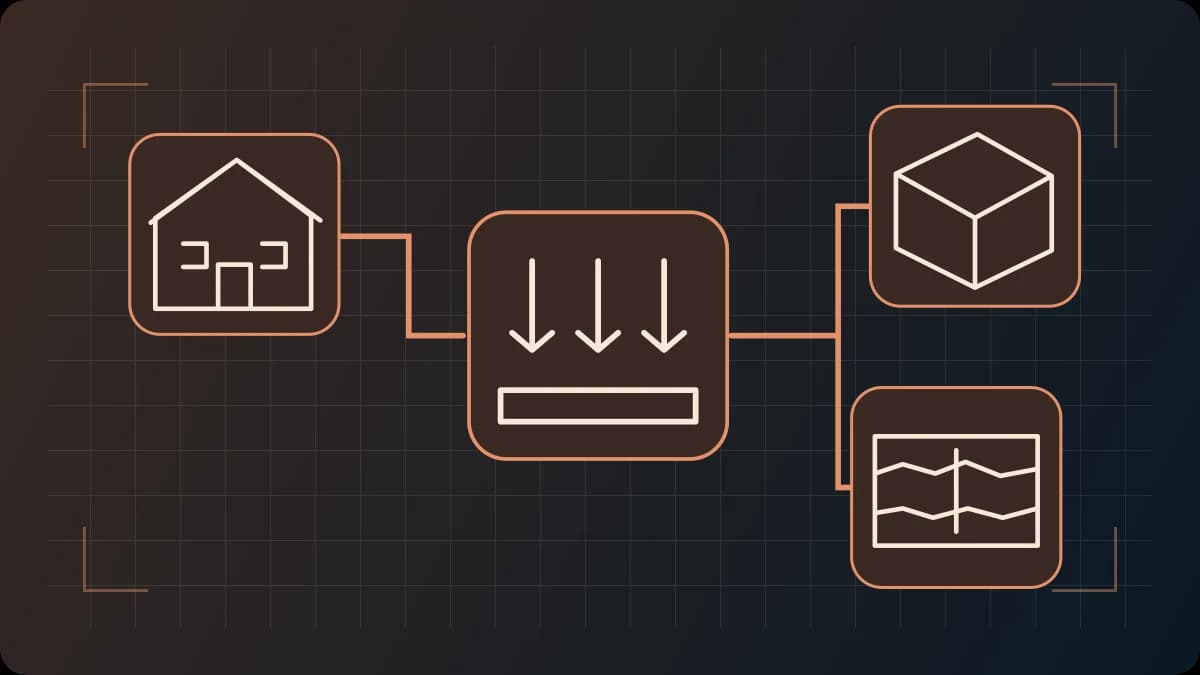
Concept illustration
A preliminary building study assistant designed to organise project data and support the initial technical estimates needed to prepare a building project.
Surface, line and point loads each need their own unit and source.
The theoretical area is unavailable without supplied allowable bearing capacity.
Geometry, counts and allowances need to be kept separate to explain the total.
Load sources are retained. Volumes and the area quotient remain separate arithmetic results.
Implemented, hosted scope to confirm
Three load categories organised into sourced rows in their canonical units.
Implemented, hosted scope to confirm
Quotient available with a positive load and supplied allowable bearing capacity.
Implemented, hosted scope to confirm
Rectangular volumes, a supplied allowance, and quantities from a sourced user-provided recipe.
A surface load is multiplied by its area and a line load by its length. Point loads are entered directly in kN.
Service load / allowable bearing capacity gives an area in m², because 1 kPa = 1 kN/m². The report distinguishes soil information from the preliminary result.
Length × width × height × count, before the supplied allowance. Material quantities require a sourced recipe and its units.
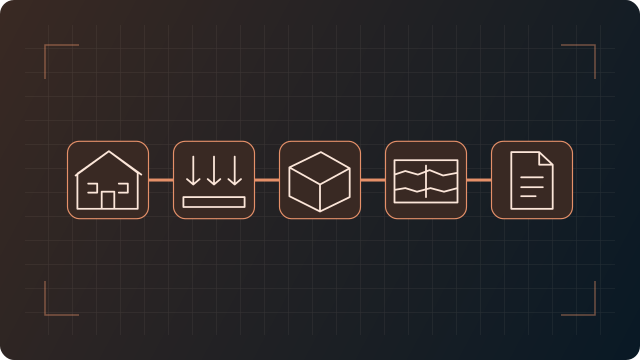
The quotient is a gross estimate. A professional study must assess supports, settlement and stability.
Conceptual illustrations of the workflows.
Separate measurements to avoid counting the same value twice.
The area depends on the supplied allowable bearing capacity.
Show quantities before and after the entered allowance.
The Eurocodes are documentary references. Their presence does not establish regulatory compliance.
The field uses kPa, equivalent to kN/m².
The displayed area is a preliminary quotient. Sizing requires a professional study.
Quantities are calculated only from a sourced recipe you provide.
The document can be printed from your browser. Review confidential details before sharing it.
Web tool available in French and English.
Solar energy
View detailsCivil engineering and road infrastructure
View detailsOpen the preliminary assessment to enter values and their sources.
Available tool