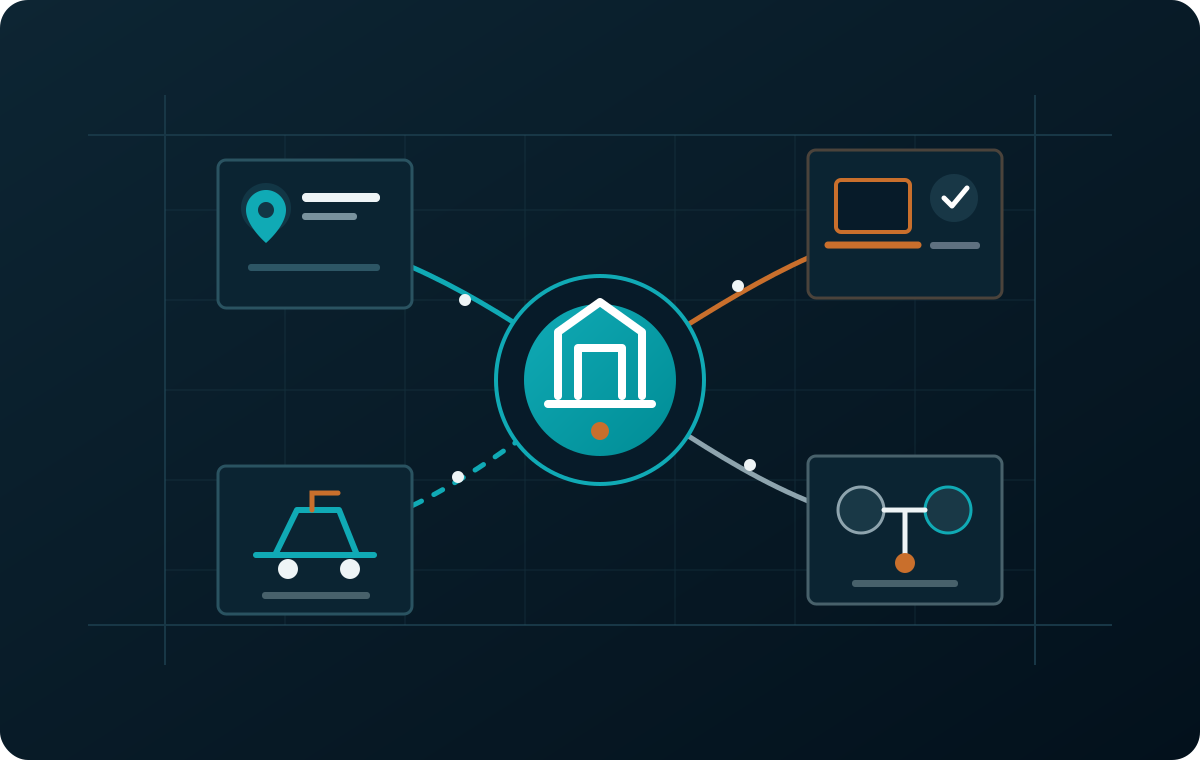
Based in Mbankomo. Assignments assessed project by project.
Our ability to intervene depends on the requested service, the location, the constraints, the required resources and the most appropriate delivery mode.
A response based on the service, location and feasibility
COREVIA International is based in Mbankomo, Cameroon. This location is our official address, but it does not on its own determine every area in which an assignment can be delivered.
Some services require physical presence, a site visit, a vehicle, transport or equipment. Others can be delivered remotely, while some projects require a combination of both approaches.
Each request is therefore reviewed before confirmation in order to define the delivery mode, resources, schedule, potential travel and conditions of delivery.
Our official location
COREVIA International is based in Mbankomo, Cameroon
Official address
Mbankomo
This address is the company’s officially communicated contact point. The ability to support a project located elsewhere depends on the service, distance, accessibility and delivery conditions.
Country
Cameroon
Locality
Mbankomo
Coverage status
Official address. It does not constitute an automatic coverage area.
001 Avenue de l’hôtel de ville35 Mbankomo, Cameroon
Three possible approaches depending on the project
The selected approach is defined after review. A service described as potentially remote or hybrid remains subject to feasibility confirmation.
On-site delivery
Physical presence is required when the assignment involves a visit, installation, inspection, vehicle, transport, equipment or local coordination.
Examples
technical visit
installation
physical maintenance
site supervision
transport
collection or delivery of goods
intervention requiring equipment
The location must be confirmed before the assignment is accepted.
Remote delivery
Certain activities can be delivered without travel when communication, documents, validation and deliverables can be managed using digital tools.
Examples
online meeting
document review
software development
translation
writing
proofreading
digital strategy
remote support
Feasibility depends on the service, available information and the level of interaction required.
Hybrid delivery
The project combines remote stages and physical intervention when preparation, monitoring or some validation can be carried out online while other operations require an on-site presence.
Examples
remote initial assessment followed by a visit
online design followed by installation
document preparation followed by physical intervention
digital monitoring combined with on-site controls
The schedule should identify the remote stages and those requiring travel.
Possible delivery modes by service
How our nine areas of expertise may be assessed
The following information indicates the approaches that may generally be considered. It does not constitute automatic confirmation of delivery.
01
Solar energy
Primary modeOn-site
Additional modeHybrid for some preparatory stages
On-site
Hybrid
Assessment, sizing, installation and maintenance may require accurate technical information, a site visit and physical intervention.
Factors to verify
exact location
accessibility
energy consumption or needs
available space
required equipment
intervention schedule
No installation should be confirmed before a feasibility assessment.
Additional modeOn-site for some interpreting assignments or specific interventions
Remote
Hybrid
On-site
Translation, transcription, proofreading and localisation can generally be delivered remotely. Interpreting depends on the format, languages, location and technical conditions.
Project definition, planning, writing, rewriting and editing can generally be organised remotely. Physical meetings or printing stages are assessed separately.
Additional modeOn-site for some installations, training or hardware interventions
Remote
Hybrid
On-site
Websites, applications and software can generally be developed remotely. Physical installations, local networks or hardware interventions depend on location.
Location is important, but it is not the only element assessed. Feasibility also depends on the nature of the service and the required resources.
01
The requested service
Some services can be delivered remotely, while others require physical presence.
02
The exact location
The city, area, site, departure and arrival points or handover location should be clearly identified.
03
Accessibility
Access conditions, distance, schedules, permissions and travel constraints may affect feasibility.
04
Required resources
Equipment, vehicles, tools, specialists, documents and logistical resources must be available or capable of being mobilised.
05
The schedule
The requested date, duration, dependencies and preparation time must be compatible with available capacity.
06
Technical and regulatory conditions
Some assignments may require permissions, safety measures, documents or specific conditions.
From request to confirmation
Five steps to validate the delivery mode and area
01
Present the project
Provide the service, location, need, desired deadline and information already available.
02
Assess the location
Review the address, accessibility, travel, departure or delivery points and local constraints.
03
Define the delivery mode
Determine whether the assignment can be delivered remotely, on-site or through a hybrid approach.
04
Assess the conditions
Clarify resources, schedule, travel, deliverables and any potential costs.
05
Confirm through a proposal
Formalise the scope, delivery mode, schedule, responsibilities and estimate before work begins.
Practical conditions
Travel and potential costs defined before delivery
When an assignment requires travel, the conditions should be assessed before confirmation. They may depend on distance, access, duration, the number of people involved, equipment and transport resources.
Any applicable travel, transport, delivery, accommodation, handling or logistics costs should be explained in the proposal.
No fixed geographic pricing should be displayed until an official pricing structure has been approved.
no hidden cost should be added after acceptance without justification
any significant change should be explained
the schedule should include preparation and travel time
an assignment may be declined when conditions do not allow reliable or safe delivery
Frequently asked questions
Clarify feasibility before you commit
01Do you operate throughout Cameroon?
We do not currently publish automatic coverage of the entire country. The ability to intervene depends on the service, location, accessibility, required resources and schedule.
02Which services can be delivered remotely?
Some digital marketing, language, book writing and IT activities can generally be considered for remote delivery. Exact feasibility nevertheless depends on the need and deliverables.
03How can I know whether an on-site intervention is possible?
Provide the exact address, requested service, desired date and main constraints in your request. COREVIA will assess this information before confirming the intervention.
04Can travel result in additional costs?
Costs may apply when travel, transport, delivery, accommodation or specific logistical resources are required. They should be presented in the proposal before work begins.
05Can I request several services at the same location?
Yes. A request may combine several areas of expertise. COREVIA will assess whether the services can be coordinated and define an appropriate delivery mode.
06What happens if my area cannot be served?
When on-site delivery is not feasible, COREVIA may consider a remote solution, hybrid approach or alternative organisation when the nature of the service allows it. No alternative will be promised before assessment.