
Create a website
Structure a web presence around identified audiences, content, journeys and objectives.
Feasibility, scope and conditions must be confirmed after assessment.
Loading...
Information technology
COREVIA International supports the design of websites, applications, software and automation defined according to project needs, processes, data, access and constraints.

A digital tool defined from the need
An IT project should begin by understanding the users, the problem to solve, existing processes and expected outcomes.
A useful feature should address an identifiable need, work with other functions and be tested against defined criteria.
Depending on the scope, COREVIA can support scoping, design, development, integrations, testing, deployment, documentation, training, maintenance or assistance.
Technologies, timelines, security levels, performance and costs must be confirmed after assessment.
Digital needs
Each need is linked to the Information technology service, while feasibility and scope remain subject to confirmation.
Structure a web presence around identified audiences, content, journeys and objectives.
Feasibility, scope and conditions must be confirmed after assessment.
Assess a browser-based tool supporting a defined process or service.
Feasibility, scope and conditions must be confirmed after assessment.
Assess mobile uses, target devices, required functions and distribution constraints.
Feasibility, scope and conditions must be confirmed after assessment.
Scope a tool built around precise business rules, users, data and responsibilities.
Feasibility, scope and conditions must be confirmed after assessment.
Describe current operations before assessing a digital flow for information and approvals.
Feasibility, scope and conditions must be confirmed after assessment.
Identify repetitive actions that can be governed, checked and automated under defined rules.
Feasibility, scope and conditions must be confirmed after assessment.
Assess available interfaces, exchanged data, access rights and service dependencies.
Feasibility, scope and conditions must be confirmed after assessment.
Review the tool, access, documentation and requested changes before any intervention.
Feasibility, scope and conditions must be confirmed after assessment.
Clarify the information to manage, user categories and authorised actions.
Feasibility, scope and conditions must be confirmed after assessment.
Define responsibilities, intervention categories, access and support conditions.
Feasibility, scope and conditions must be confirmed after assessment.
Verified projects
Possible services
An assignment may cover one stage or a clearly defined combination of services.
Understand the problem, users, objectives, constraints and available information.
Review observable operation, documentation, authorised access and reported difficulties.
Define functions, rules, roles, data, priorities, limits and validation criteria.
Structure components and exchanges after assessment, without imposing technology before scoping.
Represent journeys or test selected assumptions before confirming a complete solution.
Build accepted functions according to the agreed scope, approvals and conditions.
Connect systems when interfaces, rights, data and responsibilities allow it.
Check expected behaviour and address identified issues against defined criteria.
Prepare release, checks, access and documents included in the scope.
Organise post-delivery work under explicitly accepted coverage and responsibilities.
Solution types
These categories describe possible directions and are neither packages nor predefined architectures.
Present an activity, offer and contact options in a structure suited to visitors.
Organise official information, services, resources and public journeys.
Support a defined process with identified users, rules and data.
Coordinate services, requests, content or interactions under a model to be scoped.
Centralise selected operations, information, approvals and responsibilities.
Present useful information from verified sources, calculation rules and rights.
Perform or assist repetitive tasks within clearly defined limits and controls.
Exchange data between tools when the required interfaces and permissions exist.
Project dimensions
Design should assess every dimension and their interactions before confirming scope.
Identify the people involved, their contexts, responsibilities and needs.
Define the problem, process and useful outcome before choosing features.
Describe expected actions, rules, priorities and special cases.
Specify information collected, produced, exchanged, retained or deleted.
Define who can view, create, modify, approve, administer or delete.
Check interfaces, rights and dependencies required for external exchanges.
Adapt measures to confirmed risks, access, data and responsibilities.
Plan deployment, monitoring, updates, assistance and change.
Scoping information
The clearer the context, the more structured the assessment of priorities, risks and responsibilities can be.
The project’s priority outcome.
The difficulty, delay or limitation to address.
People who will use or administer the tool.
Steps, decisions, documents and tools currently used.
Expected actions, prioritised where possible.
Proposed responsibilities and levels of access.
Information to collect, view, edit or transfer.
Existing procedures, forms, examples, mock-ups or specifications.
Software, websites, files or equipment already in use.
External services or systems to connect, subject to verification.
Computers, phones, tablets or other relevant environments.
Known access, sensitive data, obligations and risks.
Required interface, content or documentation languages.
Desired milestones and events that may affect the project.
Available budget when it can be disclosed.
Observable conditions used to assess delivery.
A request can still be submitted when some information is missing.
Tools developed by COREVIA
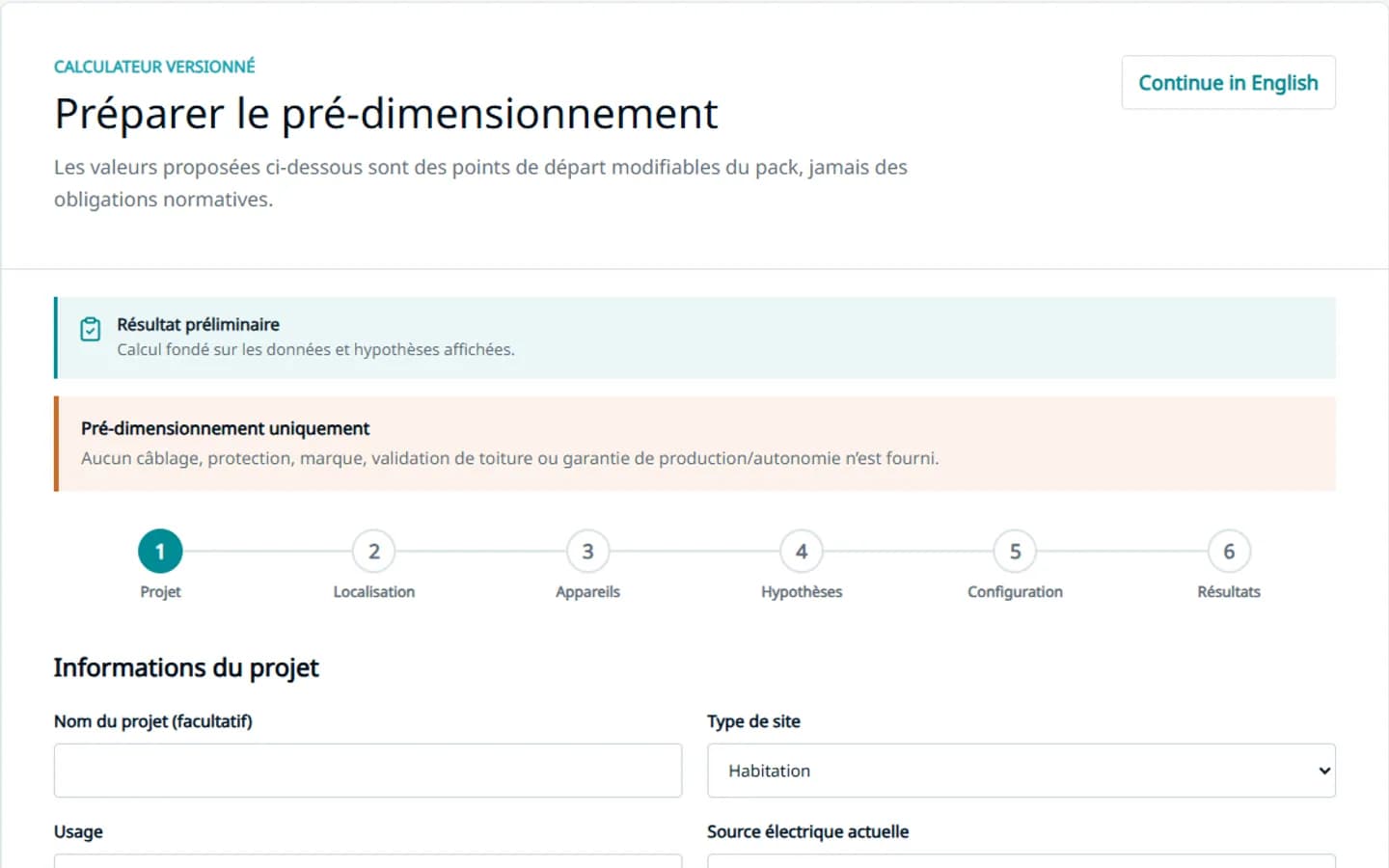
Web-based solar pre-sizing tool that organises appliances, estimates energy needs and compares preliminary panel, battery and inverter configurations.
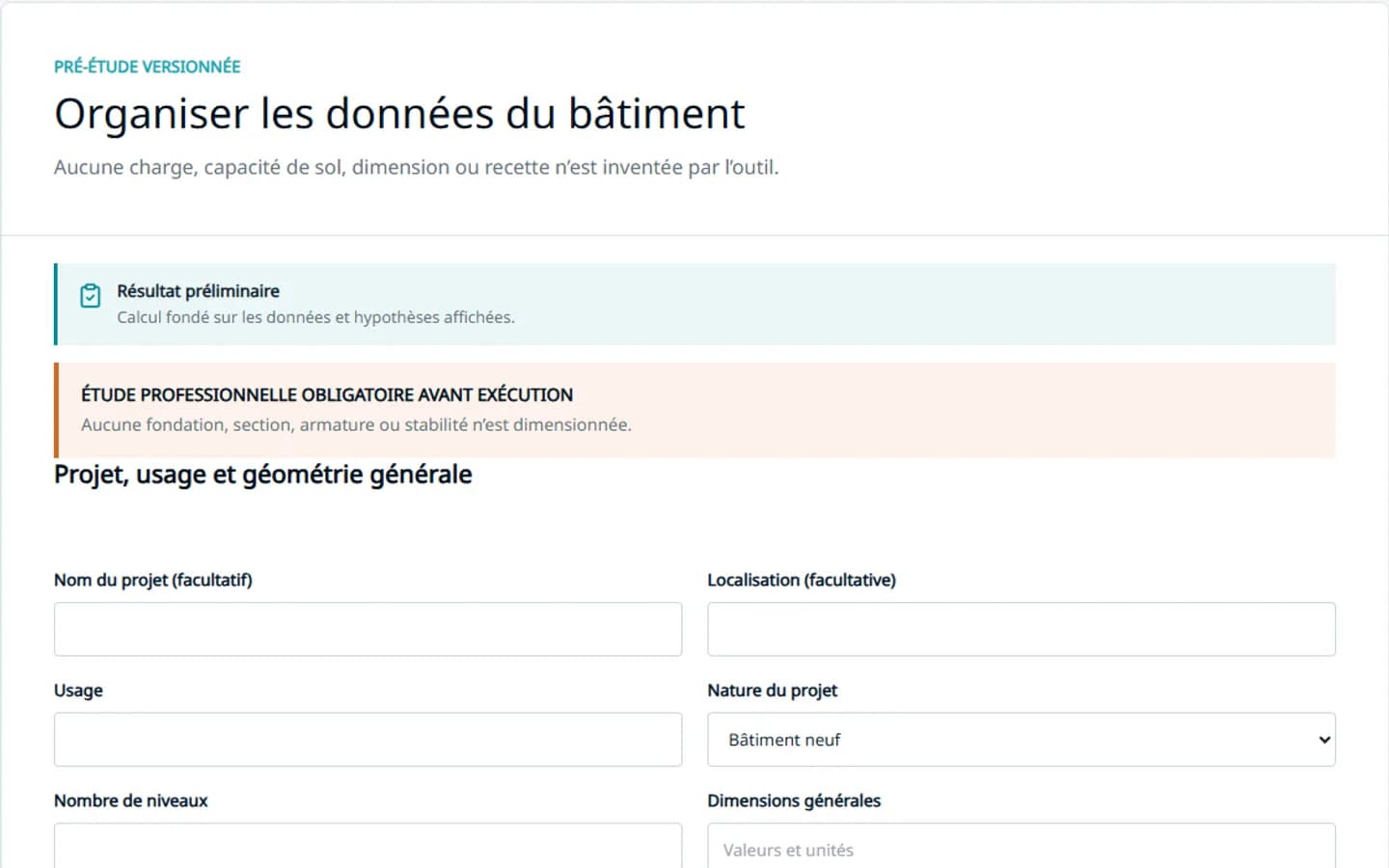
Web-based building pre-study tool that centralises project information, aggregates entered loads and estimates areas or volumes without producing execution design.
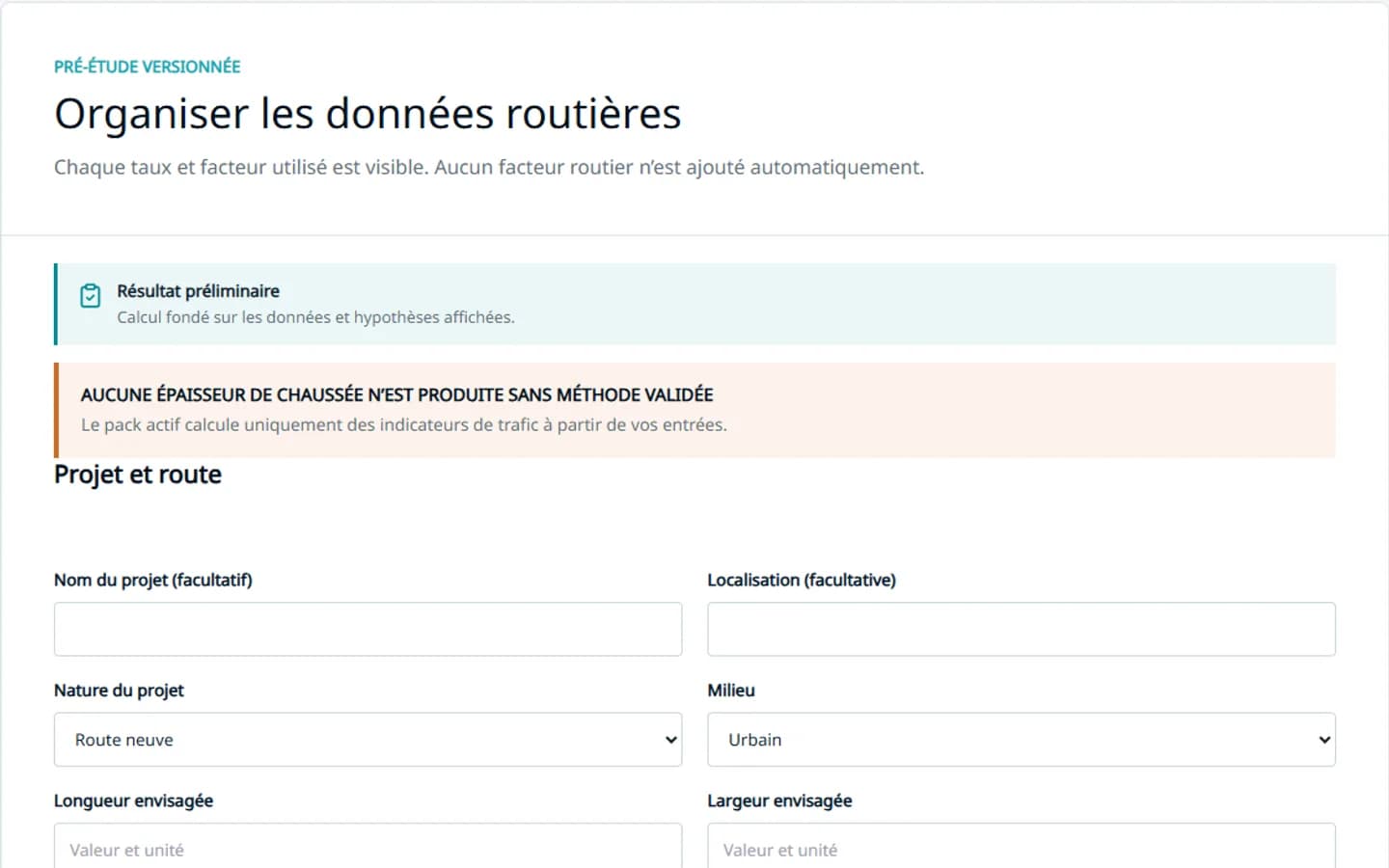
Web-based pavement pre-study tool that organises road data, calculates cumulative traffic and equivalent axles when the required factors are supplied.
Users and access
Access is designed from responsibilities and genuinely required actions.
Separate profiles according to duties and usage contexts.
Specify viewing, creation, editing, approval and deletion rights.
Limit access to required functions and data.
Reserve sensitive actions for explicitly authorised roles.
Plan account creation, updates and deactivation.
State who grants, reviews and removes rights.
Adjust permissions when duties or responsibilities change.
This page displays no real account, password, identifier or secret.
Design and development
Steps are adapted to the project and include approvals before major commitments.
Gather the need, objectives, context and initial constraints.
Understand current steps, information, decisions and difficulties.
Identify profiles, responsibilities, environments and access levels.
Define functions, rules, data, integrations, limits and priorities.
Organise expected actions, screens, states and approvals.
Represent or test useful assumptions before full development.
Build validated elements within the agreed scope and controls.
Check expected behaviour and correct identified issues.
Prepare and release the solution in the accepted environment.
Provide documents, training and the planned follow-up arrangements.
Possible deliverables
Each deliverable should be named, described and connected to an approval or responsibility.
Summary of the need, objectives, limits and assumptions.
Representation of steps, participants, data and decisions.
Profiles, responsibilities and rights to be confirmed.
Accepted functions, rules, cases and criteria.
Organisation of content, screens and movement.
Visual representations without complete software operation.
Exploratory version that may remain partial or unsuitable for production.
Code elements transferred only under accepted rights and conditions.
Version intended for checks in a controlled environment.
Version released when deployment is part of the scope.
Guides and information planned for use or operations.
Summary of checks, reservations, approvals and transferred elements.
Transfer of source code, accounts, licences and intellectual property depends on the accepted conditions.
Maturity levels
The deliverable’s level determines what can be understood, tested or used.
A structured intention that still requires assessment and approval.
A mock-up does not operate as software: it visually represents an interface or journey.
A functional exploration that may be incomplete and unsuitable for production.
A controlled version reserved for checks and designated users.
A deployed version with defined environment, access and responsibilities.
Production requires confirmed deployment, monitoring and responsibility conditions.
Technology choices
No framework, provider or environment is presented as systematically used.
Fit with genuinely expected functions, rules and journeys.
Profiles, access contexts and volumes to be confirmed.
Deployment, administration, cost and responsibility conditions.
Required external interfaces, formats, rights and dependencies.
Ability to correct, update, document and evolve the solution.
Resources needed to develop, operate and transfer the solution.
Measures suited to defined access, data, risks and requirements.
Compatibility with available resources, priorities and delivery stages.
The choice may change when needs, constraints, third-party services or operating conditions evolve.
Integrations and third-party services
An integration depends on the external system, its rules and actually available access.
Check that a suitable interface exists and covers expected operations.
Confirm permissions, accounts and accessible scope.
Review available instructions, formats, versions and terms.
Identify quotas, restrictions and applicable rules.
Clarify any costs billed by the third-party service.
Assess known changes, versions and dependencies.
Define information, formats, purposes and required safeguards.
Separate client, COREVIA and external provider responsibilities.
An integration depends on the third-party provider and may require adaptation when its service changes.
Data and confidentiality
Data is assessed by purpose, sensitivity, users and lifecycle.
Limit collection to information required for the defined purpose.
Explain why each data category is used.
Plan entry, correction and updating rules.
Restrict information to authorised roles.
Define periods and responsibilities according to applicable needs.
Plan removal, archiving or anonymisation conditions.
Clarify covered data, frequency and responsible party.
Retain useful events without unnecessarily exposing sensitive information.
Avoid publication and restrict access to keys, passwords and identifiers.
Define detection, escalation, communication and planned actions.
This section is not a legal or cybersecurity certification.
Possible tests
Test scenarios, environments, criteria and responsibilities must be defined.
Check expected rules and outcomes for defined scenarios.
Check states, journeys, messages and interactions.
Assess display and use on target devices.
Assess selected criteria for more inclusive use.
Check exchanges between authorised modules or services.
Check actions available to each planned role.
Measure explicitly defined scenarios and conditions.
Check that selected functions remain compliant after change.
The exact list depends on the project. A successful test does not guarantee that no future defect will occur.
Security
Security combines design, configuration, operations, updates and responsibilities.
Restrict resources to authorised people and services.
Choose mechanisms according to users, risks and environments.
Define session opening, duration, closure and revocation.
Keep keys and identifiers out of public content and restrict access.
Check formats and values before processing.
Check authorisation at action and data levels.
Record useful events without publishing sensitive data.
Organise assessment and application of fixes under defined responsibilities.
Define coverage, retention and restoration checks.
Plan roles, actions, communications and lessons learned.
No measure guarantees invulnerability or the permanent absence of vulnerabilities.
Deployment
Deployment is organised around the environment, data, access and planned approvals.
Check required resources, access and responsibilities.
Define settings without publishing secrets.
Prepare sources, rules, checks and rollback options.
Check the version, dependencies and launch conditions.
Release the accepted version under the defined procedure.
Check priority functions, access, events and behaviour.
Provide planned information, access and responsibilities.
The actual deployment of this COREVIA website is not performed in this prompt.
Hosting and responsibilities
Hosting accounts and services require identified owners, costs and access.
Name the entity owning and responsible for the account.
Clarify subscriptions, renewals and external costs.
Identify the owner, registrar and renewals.
Restrict, document and allow revocation of sensitive rights.
Specify coverage, frequency and checks.
Assign responsibility for assessing and applying changes.
Specify observed events, alerts and responsibilities.
Organise handover of access, documents and required information.
The hosting provider remains responsible for its own services and terms.
Documentation and training
Documentation depth depends on users, operations and accepted scope.
Present journeys and actions for relevant users.
Describe management functions and related responsibilities.
Document elements needed for planned operations or transfer.
Describe stages, checks, responsibilities and rollback options.
Support defined profiles on covered uses.
Provide a concise reference for initial use.
Documentation and training are included only when stated in the scope.
Maintenance and assistance
Corrective, preventive and evolutionary maintenance and assistance have different purposes.
Address reproducible issues within the accepted scope.
Assess and apply selected technical or functional changes.
Observe defined events and indicators when this service is included.
Run or verify backups only under the agreed role.
Handle covered requests through defined channels and conditions.
Assess enhancements as new requests requiring scoping.
Review changes to relevant components and third-party services.
Document planned work, findings and decisions.
No maintenance, backup, monitoring or assistance is automatically included.
Change management
A correction, new feature, evolution or late information does not have the same impact.
Describe the change, reason and expected outcome.
Review affected features, data, testing, schedule, cost and risk.
Explain acceptance, rejection, deferral or alternatives.
Validate consequences and responsibilities before implementation.
Update references, then implement and check the accepted change.
Any change affecting scope, cost, schedule or responsibilities must be accepted before execution.
Cost and schedule
Cost and schedule depend on scope, complexity, approvals and responsibilities.
Volume, priority, interactions and special cases.
Required calculations, approvals, exceptions and decisions.
Profiles, rights, journeys and related checks.
Sources, quality, migration, storage and lifecycle.
External interfaces, access, testing, costs and dependencies.
Research, mock-ups, variants, content and approvals.
Browsers, devices and environments to support.
Interfaces, content, formats and translation process.
Defined risks, measures, checks and responsibilities.
Families, scenarios, environments and coverage level.
Environments, data, access, migration and transfer.
Planned monitoring, assistance, guides, training and changes.
No universal price, per-screen price, standard timeline or guaranteed number of days is published.
Delivery modes
Websites, applications and software can generally be developed remotely. Physical installations, local networks or hardware interventions depend on location.
On-site availability, location, access and responsibilities must be confirmed before scheduling.
Review delivery areas and modesDelivery method
Understand users, the need, existing tools and constraints.
Define features, data, roles, integrations, risks and priorities.
Present deliverables, steps, approvals, timelines, responsibilities and an estimate.
Design, develop, integrate, test, correct and document.
Deploy or hand over the solution, train users and organise planned maintenance or assistance.
Client profiles
The client profile does not guarantee feasibility or results.
This page presents needs and services that may be assessed. It is not an architecture, final specification, quotation, security guarantee, availability promise or technology confirmation.
Frequently asked questions
Websites, applications, business tools, platforms, dashboards, automation and integrations can be assessed. The solution, technologies and feasibility are defined after scoping.
Yes. A showcase or institutional website, or a site with specific functions, can be assessed according to audiences, content, journeys, languages, responsibilities and operating conditions.
A mobile application can be assessed. Target devices, distribution, functions, data, integrations and related obligations must be confirmed.
Yes, after describing the process, participants, documents, decisions, exceptions and objectives. Digitalisation does not mean every stage should be automated.
Work may be possible when the tool’s state, rights, code or documentation, access and risks can be reviewed. The assessment may also conclude that another approach is preferable.
From users, the need, rules, data, roles and success criteria. Features are prioritised and approved before entering the scope.
A mock-up represents the interface without full operation. A prototype explores selected assumptions. A production version is deployed in a defined environment with operating responsibilities.
Ownership, usage rights, pre-existing components and code transfer conditions must be defined in the accepted terms. No transfer is implicit.
The owner of accounts, the domain and external services must be identified. Administrative access, payments, renewals and transfer conditions are also clarified.
Yes, when interfaces, rights, documentation and conditions allow it. An integration remains dependent on the provider, its limits, costs and changes.
No. Testing and corrections can reduce known defects within a defined scope, but no software can be presented as permanently bug-free.
Measures are selected according to data, access, risks and responsibilities. They may cover minimisation, permissions, secrets, backups and incident management.
Testing may cover functions, interfaces, responsive design, accessibility, integrations, permissions, scoped performance or regression. The exact list depends on the project.
Only when stated in the accepted scope. Correction, monitoring, backups, assistance and changes are distinguished and may have different responsible parties.
Scoping, design, development, testing and documentation can generally be performed remotely. Some installations, training or physical work require a hybrid or on-site mode.
Cost depends on features, roles, data, integrations, design, devices, security, testing, deployment and support. An estimate requires a sufficiently defined scope.
The schedule depends on complexity, available information, approvals, dependencies and resources. It is proposed after scoping and may change with accepted modifications.
Present the objective, users, current process, desired features, data, existing tools, constraints, schedule and indicative budget, even if some information is missing.